


The recording is now available. View now.
Meeting Logistics
Date: Thursday, March 26, 2026
Time: 6:00 p.m. Check-in / Social Hour
6:30 p.m. Dinner
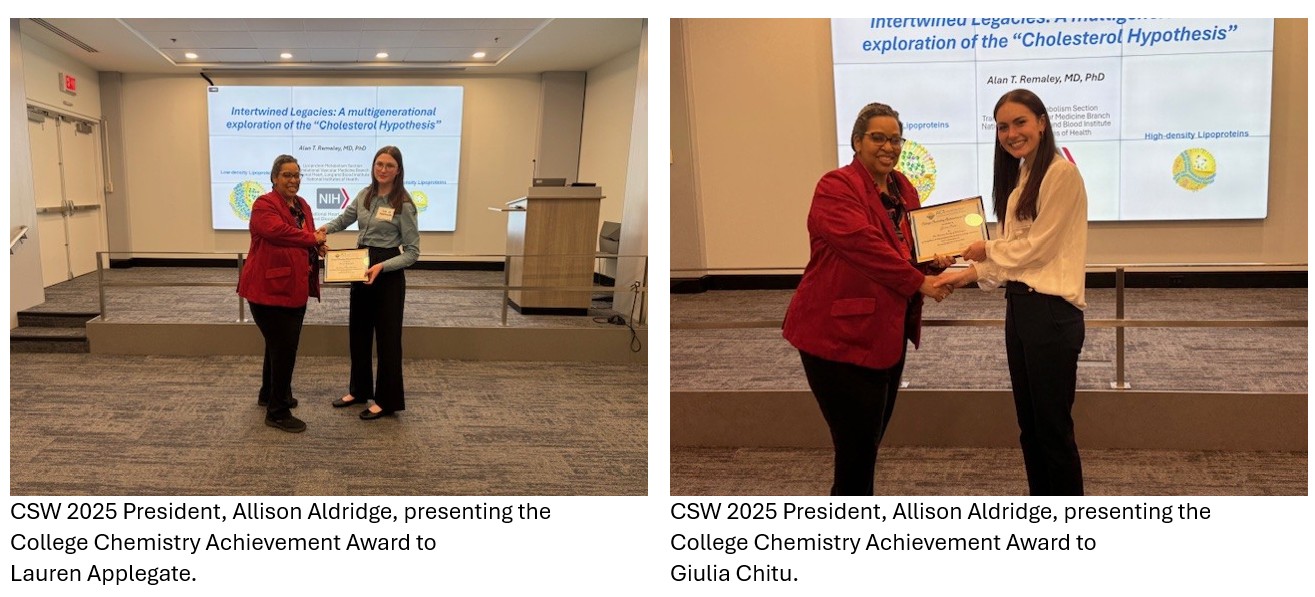
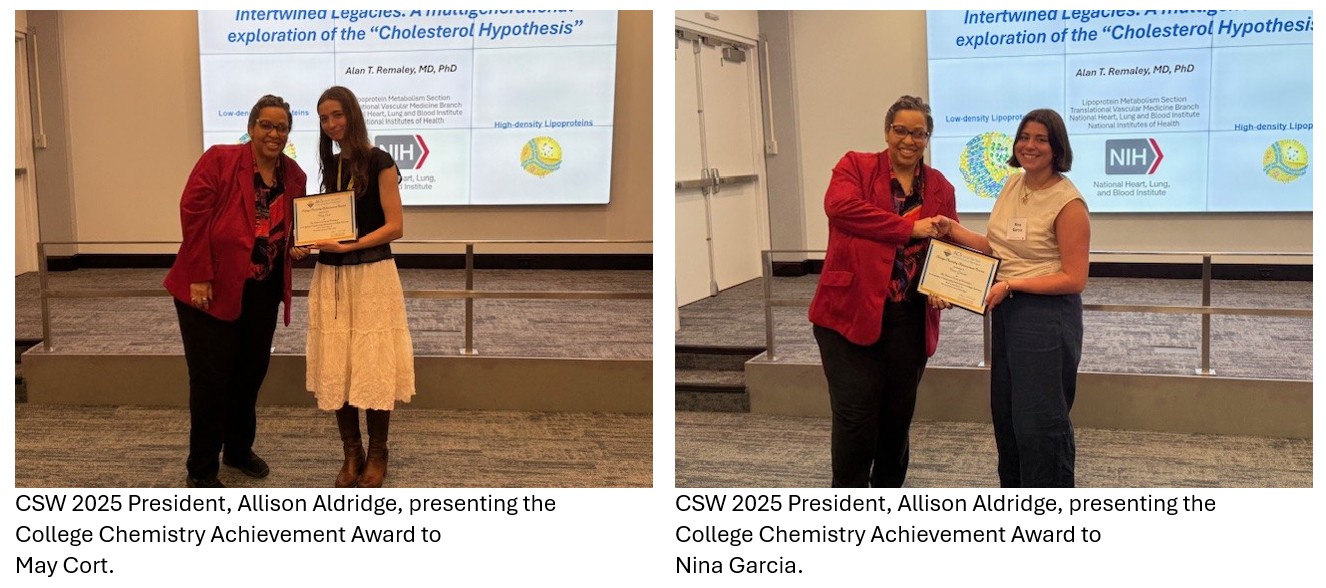
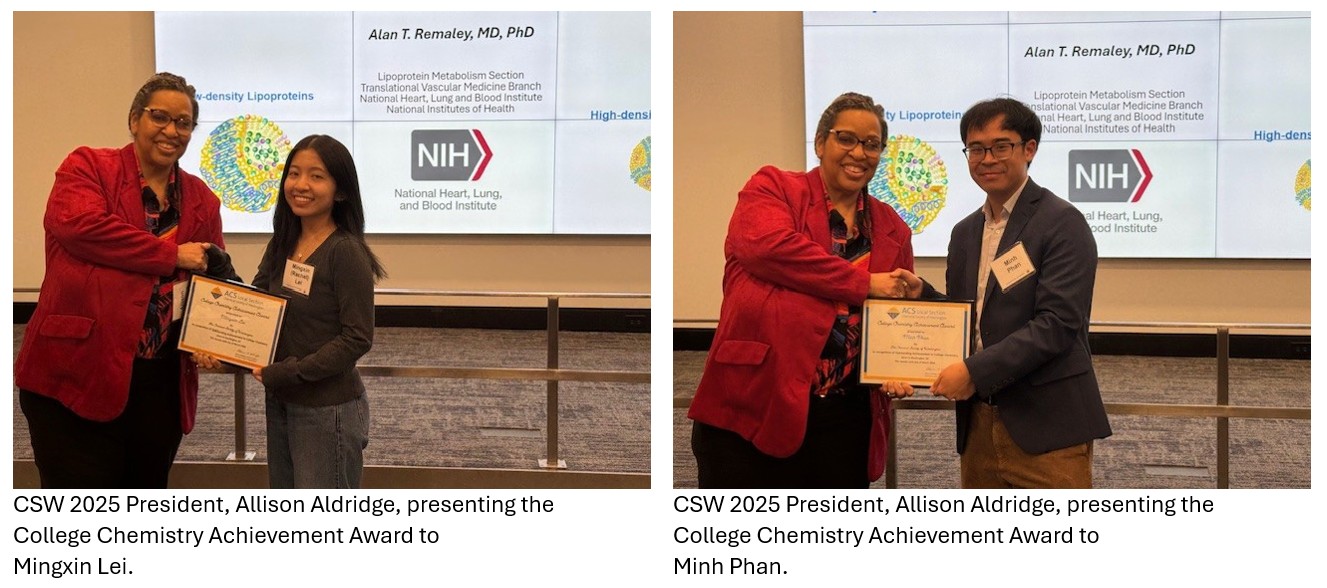
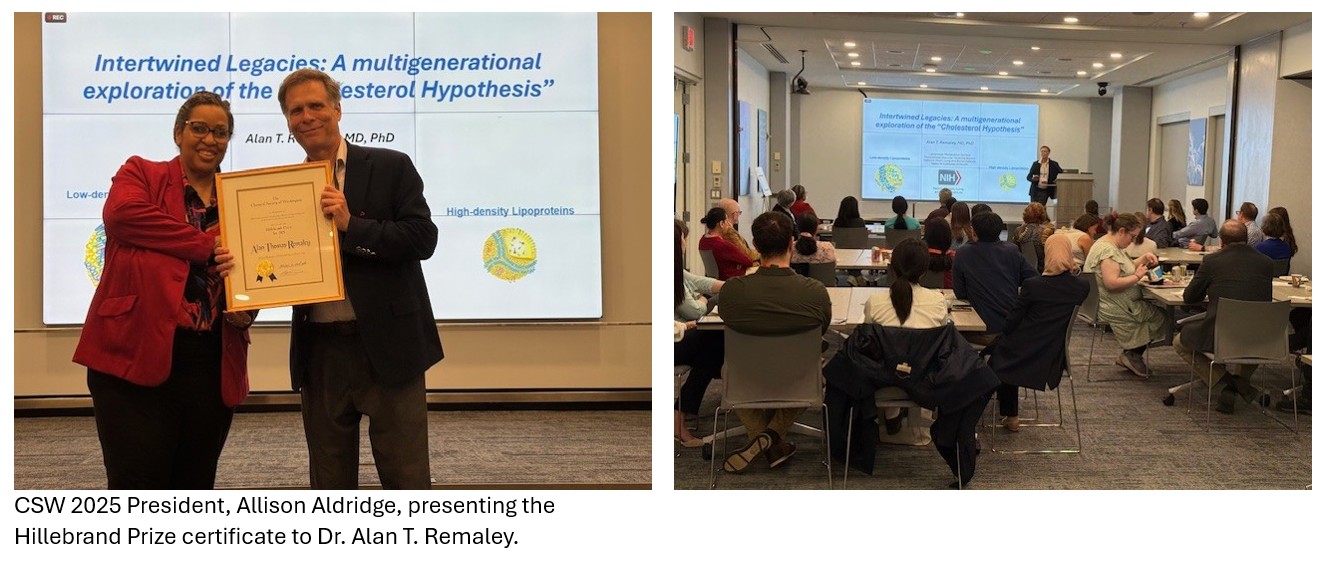
7:00 p.m. Presentation of Awards, followed by Presentation by Dr. Remaley
Location: ACS Headquarters – Marvel Hall
1155 16th Street, N.W., Washington, DC
Menu: Meal will be catered by W. Millar & Co. and will feature chicken and salmon tikka mesala served over basmati rice with peas and carrots (GF), chole (garbanzo beans and spinach simmered with curry, tomato, onion and ginger (Ve, GF), Naan bread with red pepper hummus and mango chutney (Ve), mixed greens with cucumber, mint, dried cranberries and roasted cauliflower paired with coriander-cumin vinaigrette (Ve, GF), coconut-mango cupcakes (V).
Vegetarian Option available by request only: Cumin cauliflower steaks (Ve)
Cost: $26.00 per person (half price for students and high school teachers).
An RSVP is required for dinner so we can plan appropriate seating and meals – csw@acs.org
Register for the virtual option via Zoom
RSVP by noon (ET) Tuesday, March 24, to csw@acs.org. Please provide the names in your party as well as your contact information when you RSVP. The public is invited to attend. You may attend the talk only at no charge, but reservations are appreciated. If you need any further information or would like to make a reservation, please contact the CSW office by email at csw@acs.org.
Parking: Parking is available in nearby commercial parking garages. Please be aware that garage closing times vary. Parking is also available on the street after 6:30 pm, but be aware that most parking meters are in effect until 10:00 pm and may be limited to 2 hours. You should check the individual meters for details and payment methods as some are no longer coin-operated.
Metro: Blue/Orange/Silver Line: McPherson Square or Farragut West.
Red Line: Farragut North
BIO
Dr. Alan Remaley, MD, PhD, received his medical degree and PhD from the University of Pittsburgh School of Medicine. He completed his residency at the University of Pennsylvania School of Medicine. Then, he moved to the NIH to complete his postdoctoral training at NHLBI under the guidance of Dr. Bryan Brewer. Dr. Remaley has won over 50 awards for his research, has published over 500 papers on lipoprotein metabolism and cardiovascular disease, contributed to 27 book chapters, and is the inventor of 20 patents. His research paved the groundwork for the invention of new therapeutic agents and diagnostic tests for cardiovascular disease. Notably, he has made significant contributions to high-density lipoprotein metabolism related to the mechanism of the ABCA1 transporter. His therapeutic inventions of an apoA-I mimetic peptide and recombinant Lecithin: Cholesterol acyl transferase have been tested in early-stage clinical trials. More recently, Dr. Remaley has expanded his research into new diagnostics and therapeutic approaches for low-density lipoproteins and the structure of apB100, the main protein constituent of low-density proteins.
Since 1995, Dr. Remaley has mentored 13 postdoctoral fellows, three graduate students, 12 postbacs, and 19 clinical chemistry fellows. All these individuals have gone on to have great careers as scientists, professors, and doctors worldwide. He is currently mentoring one postdoctoral fellow, one postbac, and two clinical chemistry fellows. Dr. Remaley’s legacy at NHLBI has been profound. We are excited to have him as our 2025 NHLBI Research Retreat Keynote speaker, who will share his story and wise words with the new generation of NHLBI trainees.
ABSTRACT
Dr. Alan Remaley, a senior investigator at the National Heart, Lung and Blood Institute in Bethesda MD, will discuss his research on cardiovascular disease, as well as the history of the field. He will begin his lecture describing the major historic breakthroughs in chemistry and biological sciences that uncovered the pathophysiologic link between cholesterol metabolism and cardiovascular disease. He will then describe his research related on both the measurement and the structure of Low-density lipoproteins-the major causal factor in the development of atherosclerosis, He will conclude his lecture on future directions of cardiovascular research.